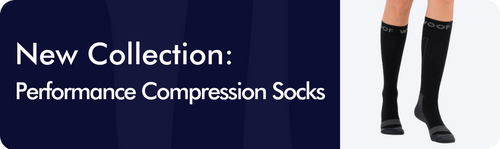


Performance Compression Socks vs Regular: What’s the Difference?

Not all compression socks are built the same. And if you've browsed Dr. Woof's performance compression socks, you've probably noticed that pairs like the Black Performance and the Fern Green look (and feel) very different from the brand's regular bamboo compression socks.
So what actually sets them apart?
This guide breaks down the real differences between performance compression socks and regular compression socks, how they work, and what to choose based on your needs.
What Exactly Is “Compression”?
Compression socks use graduated pressure that's tighter at the ankle and becomes gentler as it moves up the leg. This pressure helps veins push blood upward instead of letting it sink down and pool in your ankles.
From a physiological standpoint, graduated compression:
- Increases blood-flow velocity
- Reduces venous stasis (the sluggish circulation that often leads to swelling, fatigue, or that heavy-leg feeling after long hours on your feet)
Compression socks support your circulation, so your legs don't have to work as hard. Regular or performance, that's exactly what they're designed to do.
Read more: Compression Socks Benefits: What Science Says
What Regular Compression Socks Are Designed For
Regular compression socks focus on everyday support, the kind you feel not just during activity, but long after you take your shoes off.
Dr. Woof's standard designs, like Merryl Stripe, use 15–20 mmHg graduated compression; a comfortable, clinically common range for improving circulation, reducing swelling, and easing that "heavy legs after long shifts" feeling.
The material plays a big part in how good they feel. You get soft bamboo blends, smooth seams, cushioned heels and toes, and hypoallergenic fibers.
These are built for people who need steady, reliable support:
- Medical professionals (doctors, nurses)
- Travelers
- Pregnant women
- Anyone who spends long periods sitting or standing
Regular compression socks are the all-rounders. They keep circulation moving without the extra structural features built into performance-grade designs.
Compression Socks for Flying: Do You Really Need Them?
What Performance Compression Socks Bring to the Table
Performance compression socks offer the same circulation support regular compression socks do, but with an extra dose of structure and stability thanks to their intentional design. These medical-grade compression socks are engineered for movement, not just comfort.
Instead of the uniform weave used in Dr. Woof's Professions Socks and other regular styles, performance socks use targeted support built for movement:
- Firmer support around the arch
- Strategic reinforcement at the ankle
- Ribbed structures that stop the sock from sliding when running, lifting, or changing direction quickly
Breathability is another major upgrade:
- Ventilated mesh panels help manage heat during activity
- Durable athletic yarns that wick sweat
- Left-right anatomical shaping
They're made for people who want compression that works as hard as they do, like:
- Runners
- Gym-goers
- Hikers
- Anyone with a more active day-to-day life
For example, while regular Black Bamboo compression socks help with comfort and healthy circulation, a Navy Performance pair prioritizes control, stability, and long-wear durability during (and after) activity.
So, Do Performance Socks Improve Performance?
Not always, and not in the way most people expect.
A 2025 review looking at how compression socks affect running performance shows they don't reliably boost speed or VO₂ max. They help with support, yes, but they do not turn you into a faster athlete overnight.
Where enhanced performance compression socks do stand out, however, is in recovery.
Research on post-exercise recovery shows that these socks can reduce soreness, help limit swelling, and support faster venous return. So while they don't magically boost your speed, they can make recovery easier and more comfortable.
In short, performance socks focus less on making you better during activity and more on keeping your legs from feeling destroyed afterwards, giving you a more consistent, comfortable baseline for your next session.
Performance Socks vs Regular: Side-By-Side Comparison
A quick side-by-side look makes the differences easy to see. Same compression category; two very different intentions.
| Feature | Regular Compression Socks | Performance Compression Socks |
|---|---|---|
| Purpose | All-day comfort, swelling reduction, and circulation support | Activity-focused stability, targeted support, and post-exercise recovery |
| Compression level | 15–20 mmHg | 15–20 mmHg |
| Compression style | Uniform compression | Targeted compression zones |
| Fabric type | Bamboo-rich blends | Durable athletic yarns |
| Breathability | Naturally breathable | Ventilated mesh panels for airflow |
| Foot structure | Standard footbed, cushioned heel + toe | Left–right anatomical shaping for precise fit during movement |
| Seam construction | 360° seamless design to prevent irritation | Seamless, with reinforced zones to prevent sliding and rubbing |
| Moisture control | Sweat-wicking but comfort-oriented | Fast moisture-wicking |
| Durability | Daily wear and long shifts | Repetitive impact, running, lifting, and friction |
| Best for | Nurses, travelers, pregnant women, office workers, and anyone with swelling or circulation needs | Runners, hikers, gym-goers, athletes, active professionals |
| Feel | Soft, plush, gentle compression | Snug, structured, “locked-in” support |
Why Dr. Woof’s Performance Socks Stand Out (Beyond the Medical Grade Compression)
Dr. Woof started when three healthcare workers got fed up with seeing burnout, swollen legs, and "good enough" uniforms passed off as premium. Every performance sock Dr. Woof releases goes through the same meticulous process as their medical scrubs:
- Designed in-house
- Tested through independent quality assurance
- Produced without dropshipping shortcuts or third-party white labeling
In other words, Dr. Woof understands what long hours actually feel like, along with the heaviness, the fatigue, and the subtle aches you ignore (until you just can't). And it shows in the details:
- Socks that don't lose shape after a few years
- Yarns chosen for durability
- Designs that balance function with a bit of personality (it's Dr. Woof, after all)
Read more: Mastering the Art of How to Put Compression Socks On
FAQs
Do performance compression socks improve blood flow?
Yes, Dr. Woof graduated compression level supports blood flow, helps reduce swelling, and can ease muscle fatigue during long runs or long shifts.
Can these socks help with plantar fasciitis?
They're not a cure, but many people feel relief because the arch support helps the calf and foot maintain better alignment. A physical therapist may recommend them as part of a recovery plan.
How do I choose the right medical-grade compression socks?
Think about your routine. Are you looking for daily comfort? Go regular. Training motion, or athletic gear needs? Go performance. When you're ready to shop, look for a comfortable fit and compressive design that matches how you move.
Choosing the Best Compression Socks Starts With Knowing Your Needs
In the end, listen to your legs and choose the kind of support your day demands.
Some days call for structure, others call for softness, and most days fall somewhere in the middle. Either way, Dr. Woof makes every pair with the same no-shortcuts care and real understanding of what long hours on your feet actually feel like.